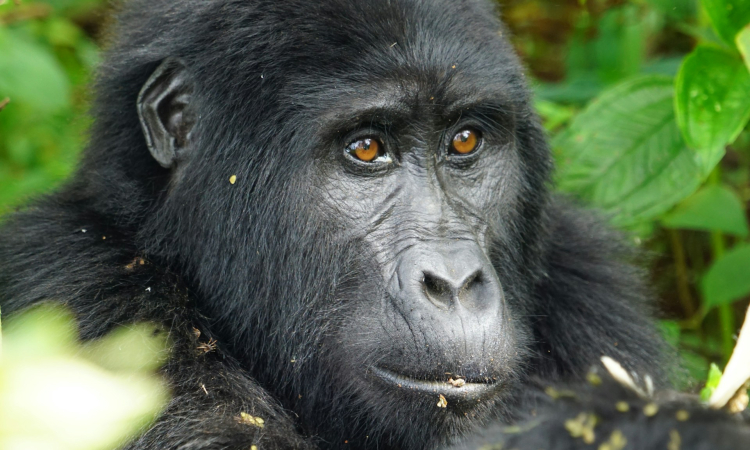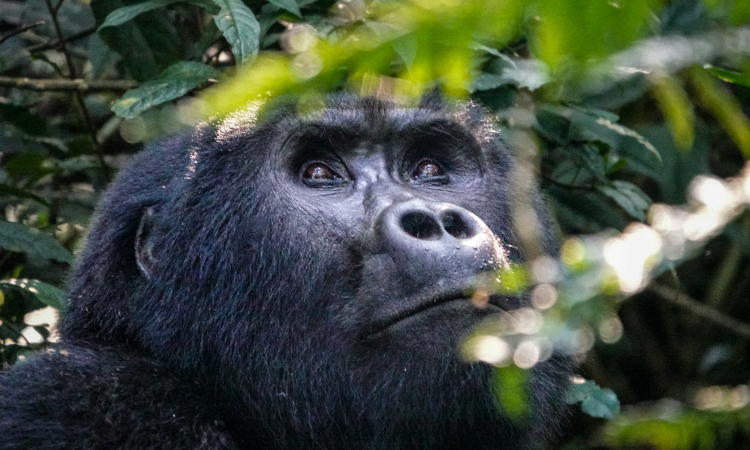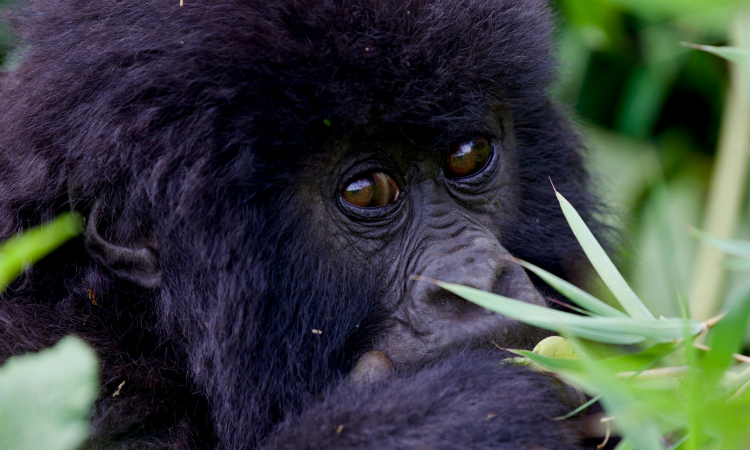
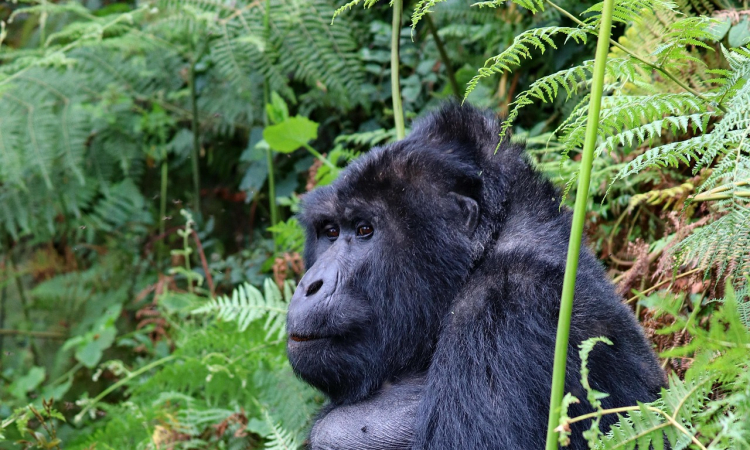
Mountain gorilla behavior – Mountain gorillas are some of the most unique and interesting animals in the wild. They share about 98 percent of their DNA with human beings.
The behavior of mountain gorillas has been studied for many years through research by experienced researchers.
The most common behavior of mountain gorillas is that they live in groups or families of about 5 to 20 members. These groups are led by a dominant male called a silverback. He makes all group decisions, protects the family, and mates with the females.
Mountain gorillas are known for being peaceful animals, but they can become aggressive when they feel threatened. Fights can happen when other gorillas try to take over the group or when predators attack.
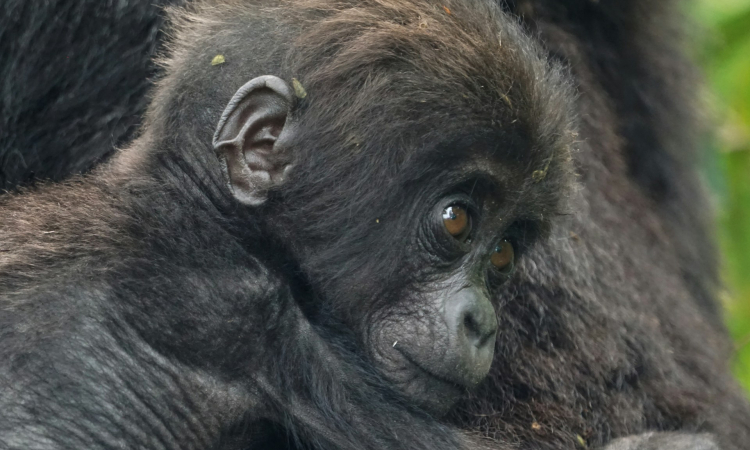
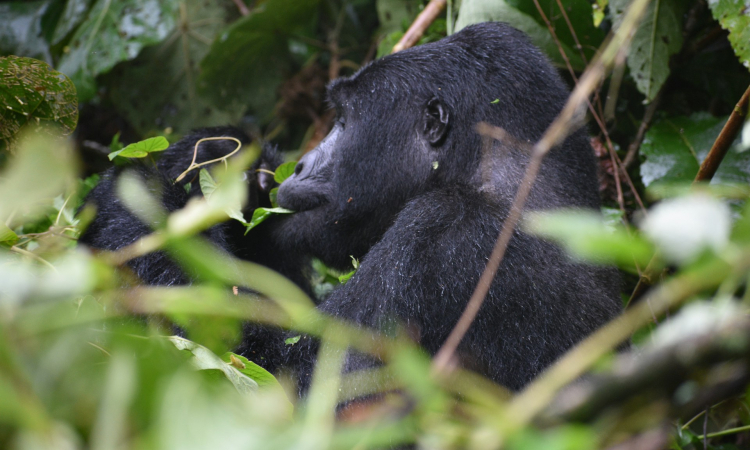
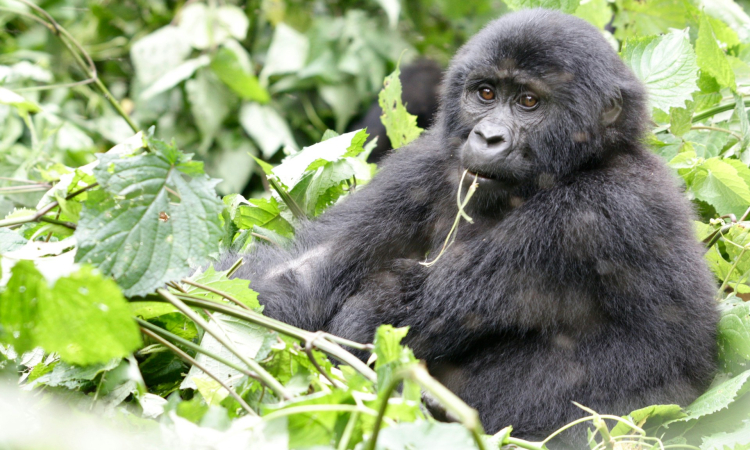
Mountain gorillas spend most of their time feeding, playing, foraging, and resting. They usually feed in the early morning and rest around midday. During resting time, young gorillas play and learn how to communicate in the group. They take part in wrestling, chasing, and other playful activities while their mothers watch them.
Mothers are very protective of their young ones, and many have died while trying to defend them from poachers.
Female gorillas have strong bonds with males compared to other females. When a female is ready to mate, she follows a male. The pregnancy lasts about eight and a half months. After giving birth, the female does not mate again for about four years.
Females breastfeed their young ones for about four years. They have only two to three fertile days each month, which leads to a low birth rate.
Mountain gorillas build a new nest every evening to sleep in. Each gorilla makes its own nest except for the young ones, who sleep with their mothers. Gorillas leave their nests when the sun rises at around 6 a.m., unless it is very cold.
In conclusion, mountain gorillas are fascinating animals that show intelligent behavior.