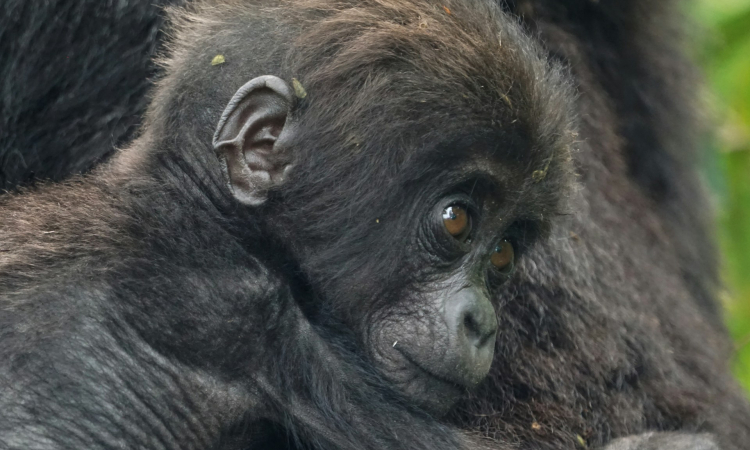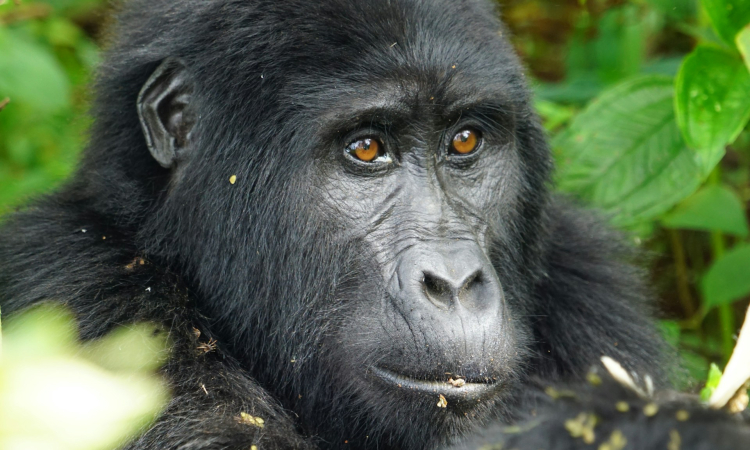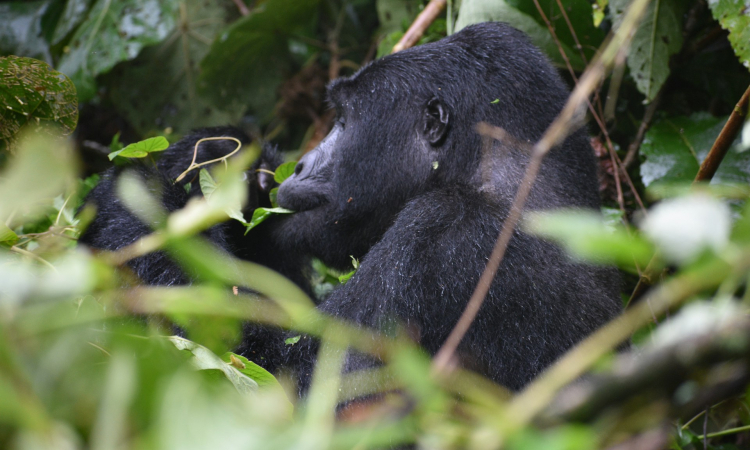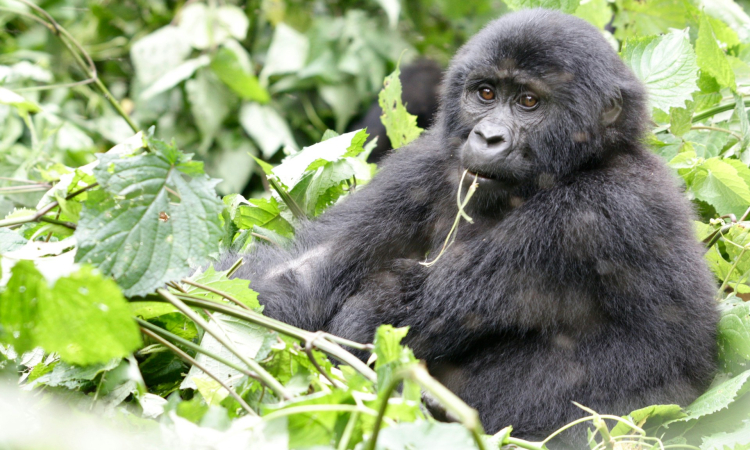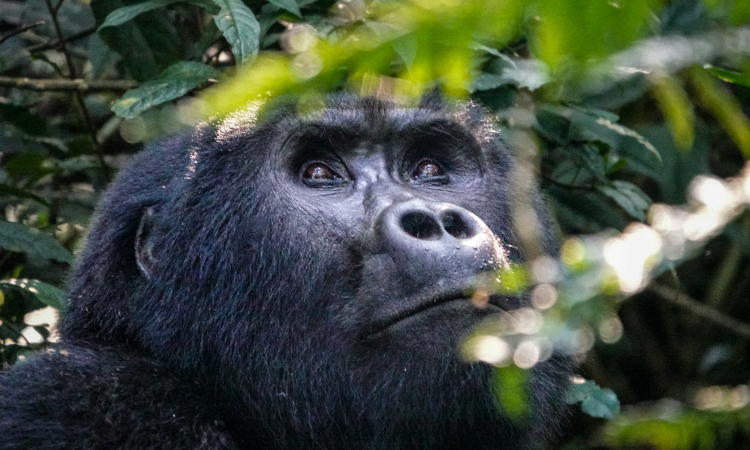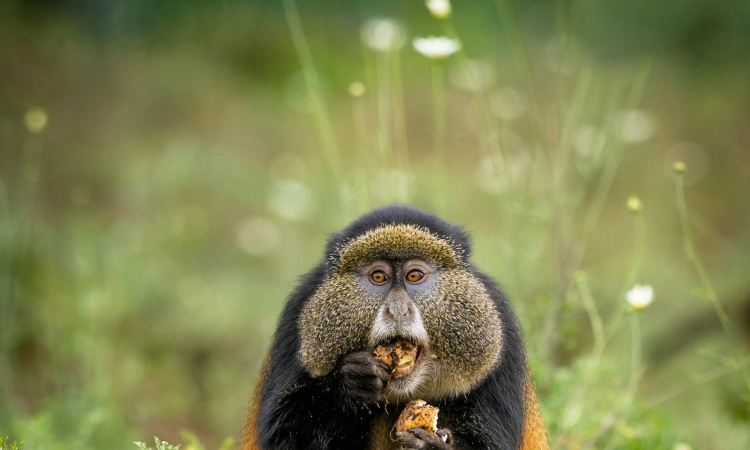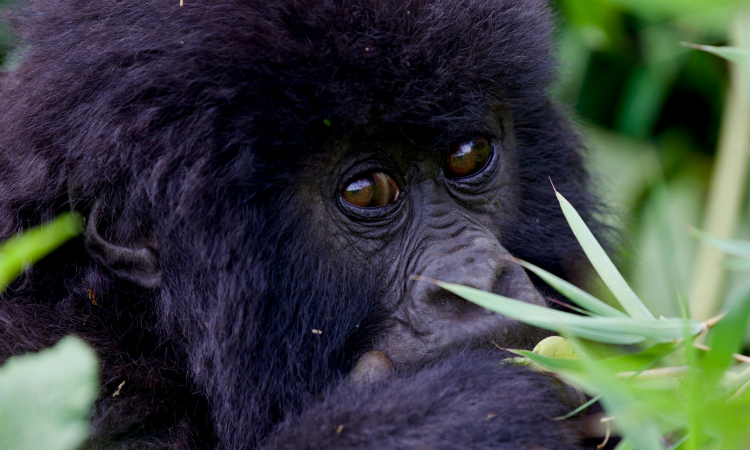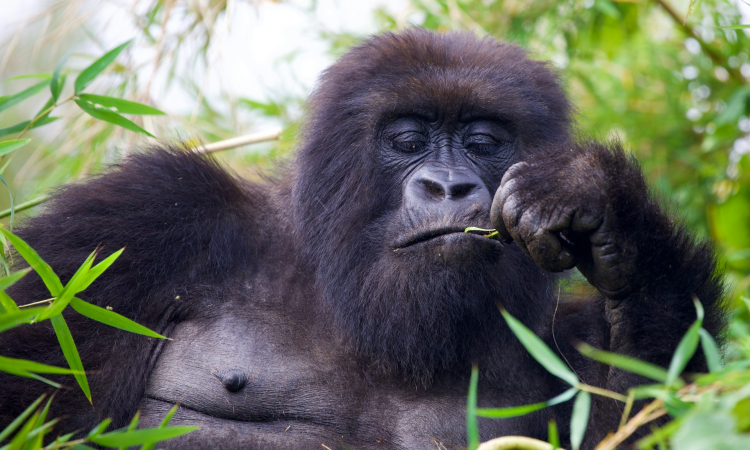
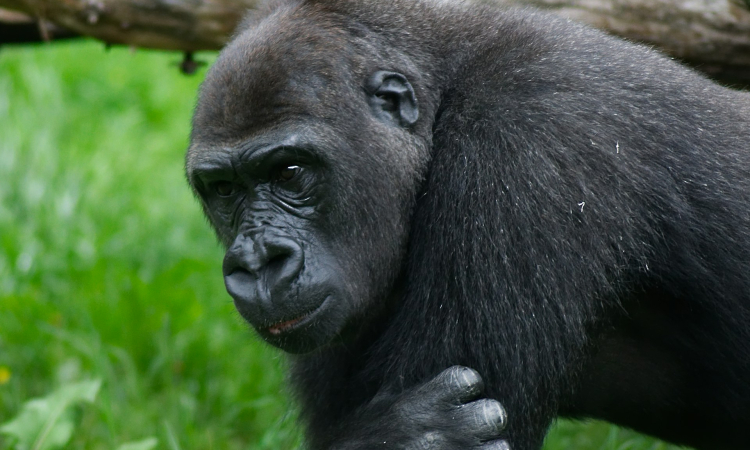
The Eastern gorilla species are the largest gorillas in the world. They include the Eastern lowland gorillas and the mountain gorillas.
Life of Gorillas
Gorillas are ground-dwelling, herbivorous great apes and the largest primates on earth. Their life in the wild is mysterious and interesting, full of character and uniqueness. Scientists believe that gorillas and humans share the same ancestral lineage, with over 98.7% of their genes being similar to humans, next to chimpanzees and bonobos.
An adult gorilla stands about 1.25 to 1.8 meters tall, has an arm span of up to 2.6 meters, and weighs between 100 and 270 kilograms, depending on the sex. A single silverback is said to be stronger than eight adult men combined.
Where Gorillas Live
Gorillas live only in Africa, in tropical and subtropical rainforests across eastern and central Sub-Saharan Africa. They are shy and peaceful animals that live in groups called troops, led by a dominant silverback, along with black-backs, females, and infants. Gorillas rarely stay in the same place for more than two nights and mainly feed on plants.
Gorilla Species & Subspecies
Gorillas are divided into two species: Western gorillas and Eastern gorillas, each with subspecies. These are the mountain gorillas, Western lowland gorillas, Eastern lowland gorillas, and Cross River gorillas.
There are about 17,000 Eastern lowland gorillas and around 1,080 mountain gorillas remaining in the wild.
Eastern Gorilla Characteristics
Among the Eastern gorilla family, the Eastern lowland gorillas are larger and thicker than mountain gorillas. They have stockier bodies, large hands, wide shoulders, muscular arms, short muzzles, and broad chests. They spend most of their time on the ground, feeding, playing, and moving around the forest.
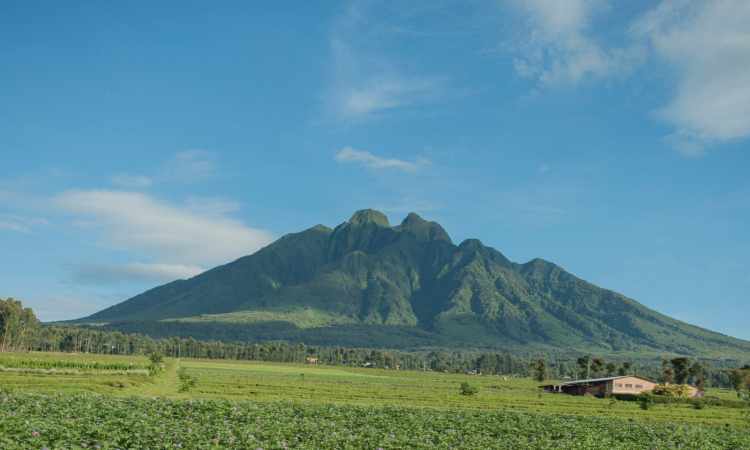
Today, there are about 200,000 gorillas worldwide. The International Union for Conservation of Nature (IUCN) lists them among the most endangered apes on earth. They cannot survive in captivity and are best protected in their natural habitats, especially in the Albertine Rift montane forests and the Virunga volcano range, at altitudes between 2,200 and 4,300 meters above sea level.
Diet & Distribution
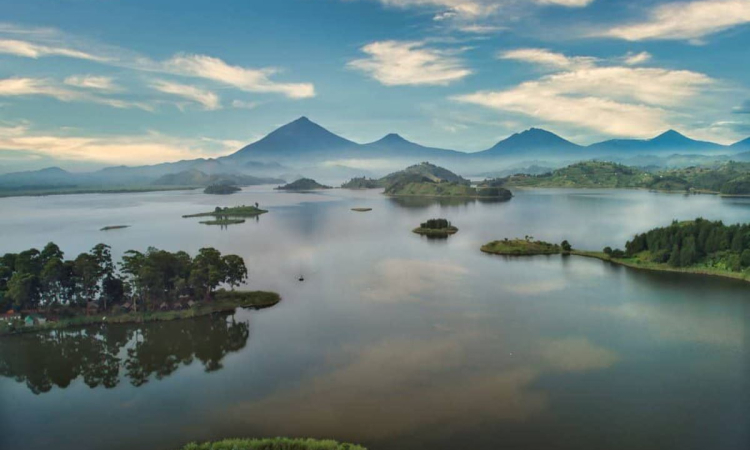
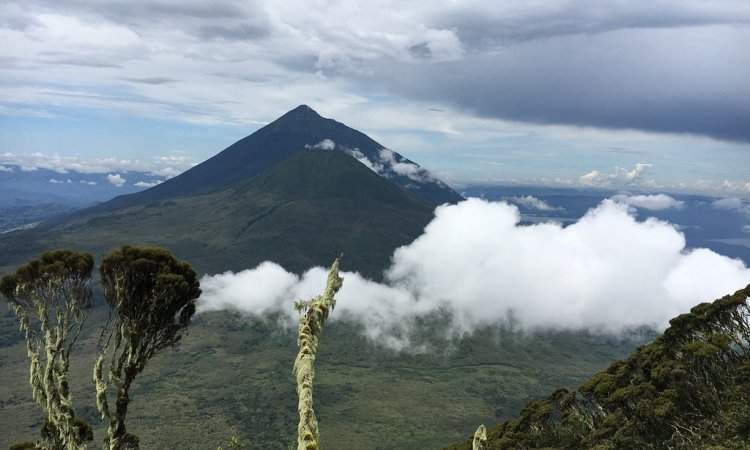
Gorillas live in dense forests, marshes, and swamps, feeding on roots, fruits, stems, and leaves. The Western gorillas are found mostly in Central Africa, while the Eastern gorillas live in the Virunga Volcano region, stretching across parts of Uganda, Rwanda, and the Democratic Republic of Congo.
Eastern gorillas are easily recognized by their darker fur and strong body shape. They are social animals that live for about 35 to 40 years. Mature males are called silverbacks because of the silver line that appears on their backs as they age. By the age of 12, males either leave the group or take over leadership by defeating the current silverback.
Where to See Eastern Gorillas
To see these rare apes, travelers must visit Africa. You can find them in:
- Virunga National Park in the eastern Democratic Republic of Congo: Home to both mountain and Eastern lowland gorillas.
- Kahuzi-Biega National Park in Congo: Famous for Eastern lowland gorillas.
- Bwindi Impenetrable National Park and Mgahinga Gorilla National Park in southwestern Uganda: For mountain gorillas.
- Volcanoes National Park in northern Rwanda: Another great place to meet the mountain gorillas.
These destinations are open for gorilla trekking all year round. Visitors are guided safely through the forest to the gorilla families. Trekking starts early in the morning with a briefing by experienced rangers. Depending on the terrain and the group’s pace, the trek can take between 1 and 8 hours, with an extra hour spent observing and photographing the gorillas.
During the trek, visitors must follow the rules, avoid loud noise, littering, smoking, or getting too close to the gorillas. Keep your mask on and respect the natural rhythm of the jungle.
Cost of Trekking the Eastern Gorilla Species
A gorilla trekking permit is required for anyone who wishes to visit these great apes. The cost per person is:
- Uganda: USD 800
- Congo: USD 400
- Rwanda: USD 1,500
Permits are valid for one trek per day for visitors aged 15 years and above.
The best months for gorilla trekking are June to September and December to February, which are dry and ideal for forest hiking. The wet months from March to May and November can also be rewarding for photography and fewer crowds.
Gorilla trekking is a once-in-a-lifetime experience found only in Africa. The Eastern gorilla species are not only the largest but also calm, intelligent, and fascinating. Visiting them in their natural habitat helps protect and conserve these gentle giants for future generations.