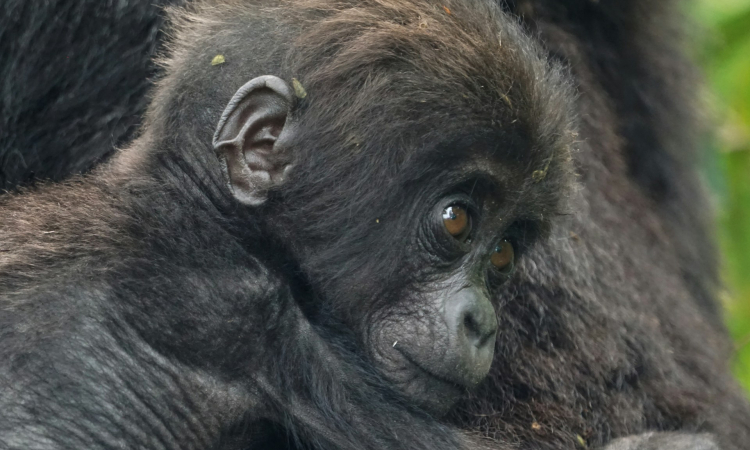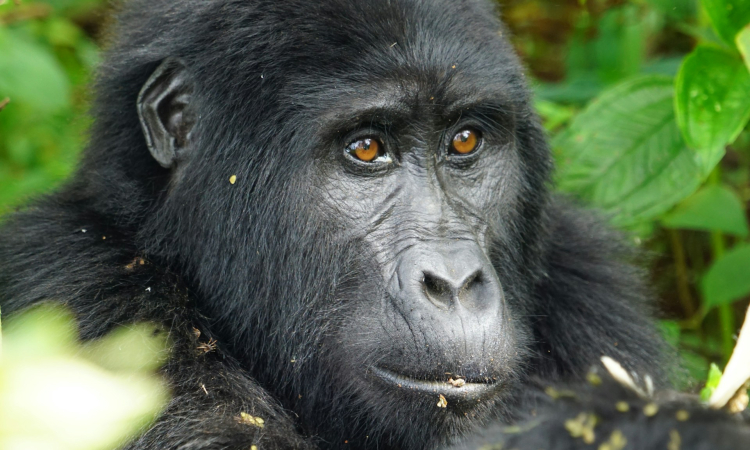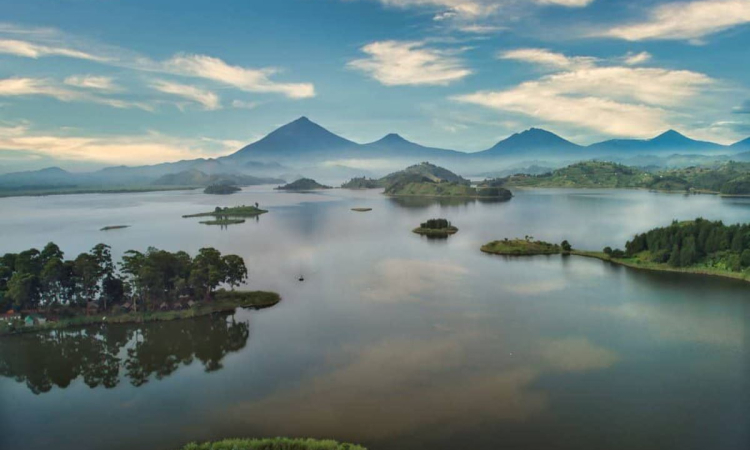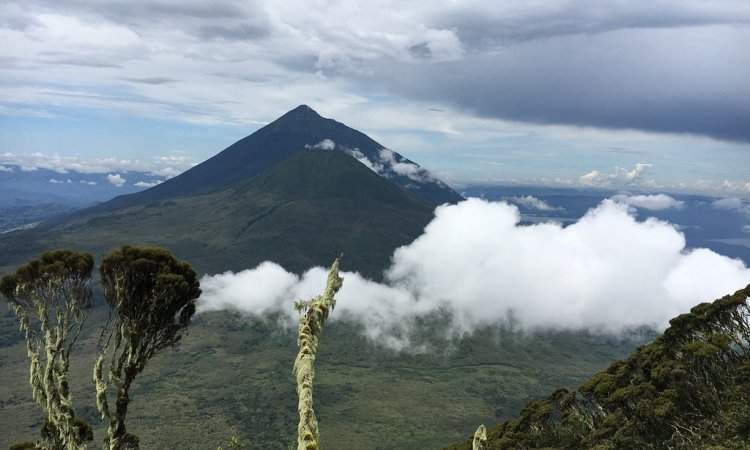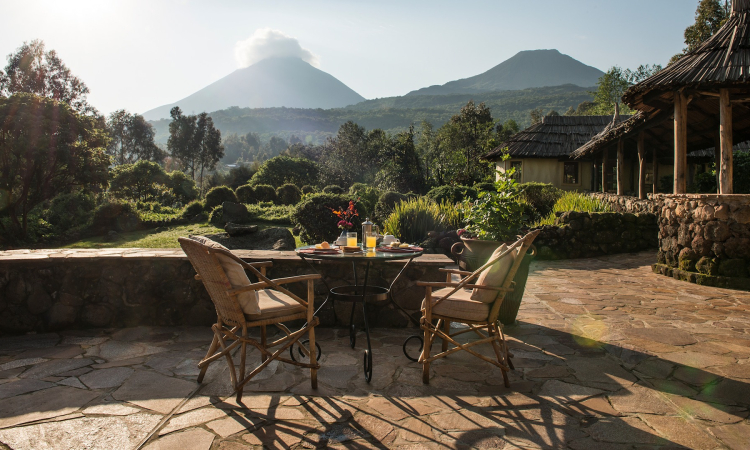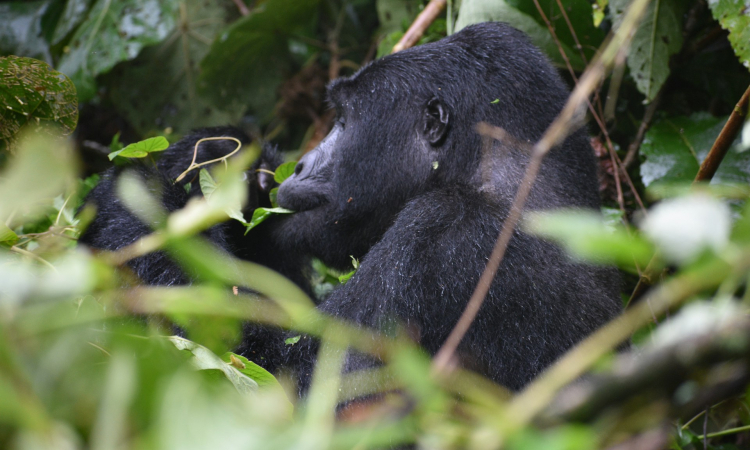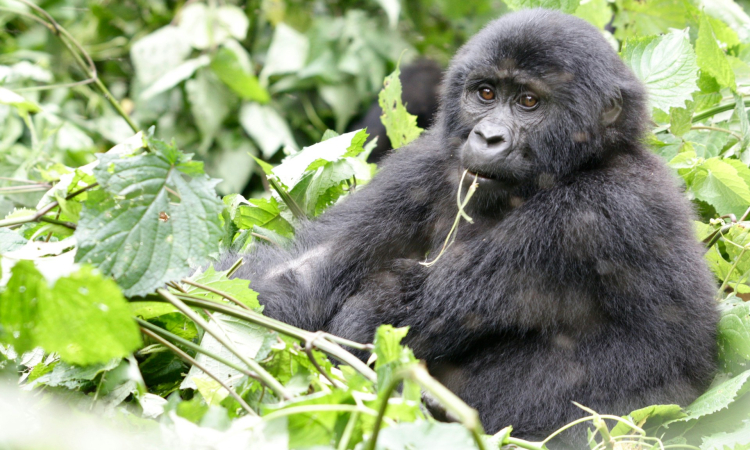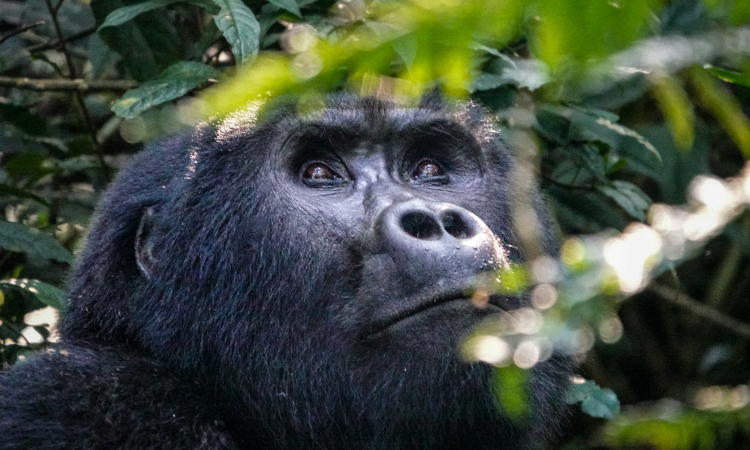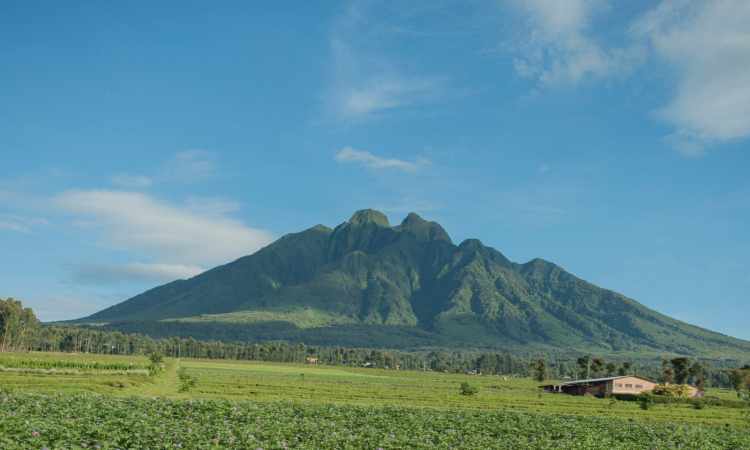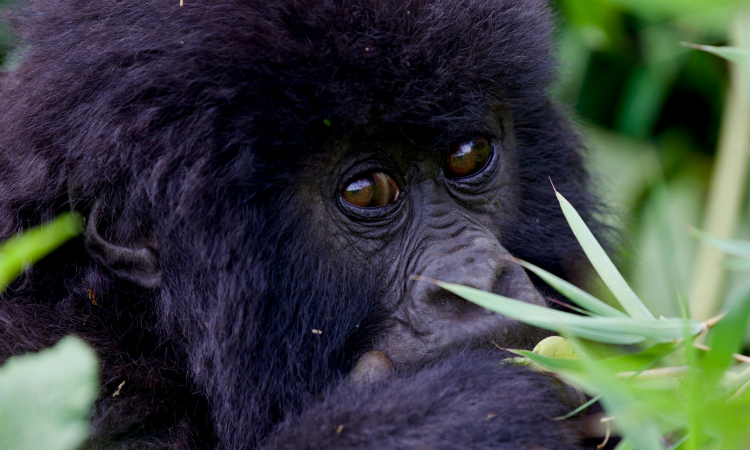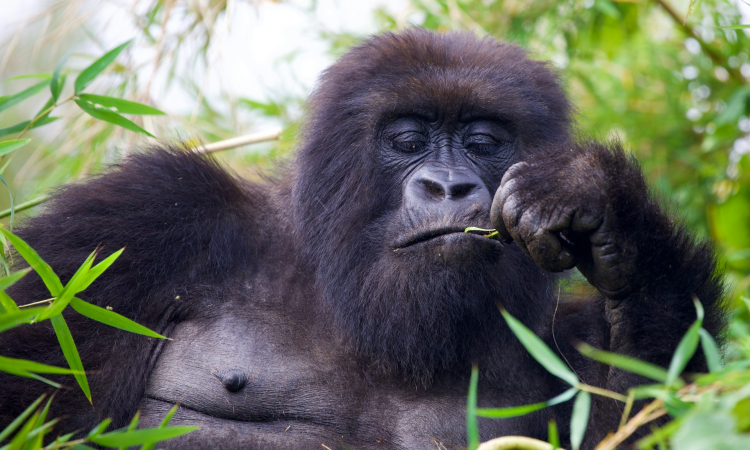
The Virunga Mountains are shared among three national parks: Volcanoes National Park in Rwanda, Mgahinga National Park in Uganda, and Virunga National Park in the Democratic Republic of Congo (DRC). The range consists of eight volcanoes, two of which are still active. The slopes of these volcanoes are home to the endangered mountain gorillas.
Mount Nyiragongo
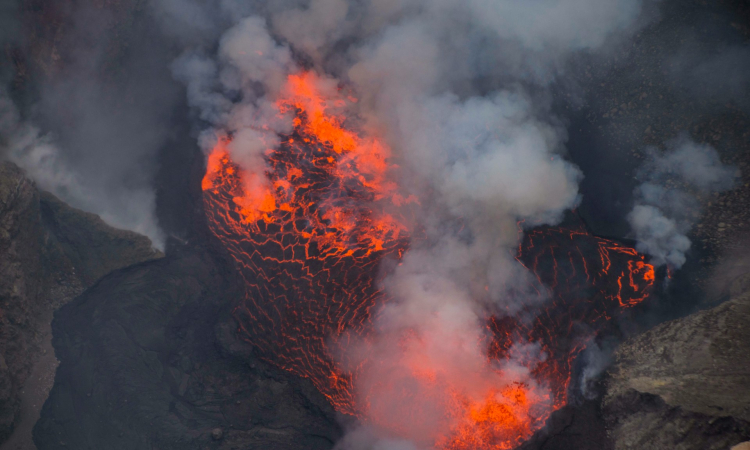
Mount Nyiragongo is located inside Virunga National Park in the DRC. It stands at an elevation of 3,470 meters above sea level and is famous for having one of the most active and voluminous lava lakes in the world. Its lava is extremely fluid, flowing at speeds of up to 100 kilometers per hour, compared to the usual 1-10 kilometers per hour for most volcanoes. This fast movement means that it rarely poses a major danger to human life.
The main crater is about 2 kilometers wide and contains two distinct cooled lava benches at elevations of 3,175 meters and 2,975 meters. Mount Nyiragongo overlaps two older volcanoes and is surrounded by many smaller volcanic cinder cones formed from past eruptions.
The unusual fluidity of its lava is believed to be caused by melilite nephelinite, an alkali-rich volcanic rock with a unique chemical composition. Mount Nyiragongo has erupted at least 35 times since 1882, although scientists are still unsure how long it has been active.
Major Eruptions
In January 1977, the crater holding the lava lake ruptured, and within 30 minutes the entire lake drained. Millions of cubic meters of lava flowed rapidly into nearby areas, burning villages and killing about 300 people. Some eyewitnesses reported that the lava reached the outskirts of Goma city in just 20 minutes.
The second major eruption occurred in 2002, following several months of seismic and fumarolic activity. A fissure opened on the southern flank, stretching about 13 kilometers and reaching elevations between 2,800 and 1,550 meters. The lava flowed through Goma town and even reached Lake Kivu, destroying 120,000 homes and killing 147 people. The city continued to experience tremors for about three months afterward.
Hiking Mount Nyiragongo
For many tourists, standing at the edge of the red, bubbling lava lake is a once-in-a-lifetime experience. The Mount Nyiragongo hike is a physically demanding adventure due to the steep terrain and high altitude, so hikers should be in good physical condition.
The hike begins at the Kibati Ranger Post, where tourists can hire a porter to help carry their luggage. The trek usually takes 5-6 hours to reach the summit. Those who wish to spend the night can stay in one of the 12 summit cabins, each equipped with two single beds. Hikers need to carry their own sleeping bags, while the camp cooks prepare dinner, coffee, and other refreshments. Watching the glowing lava lake at night is an unforgettable experience.
Descending the mountain takes about 3 hours.
What to Pack for the Hike
Visitors planning to hike Mount Nyiragongo should bring the following essentials:
- Raincoat or waterproof jacket
- Warm clothing
- Strong hiking boots
- Garden gloves
- Drinking water and energy snacks
- Sunscreen, hat, and sunglasses
Being well-prepared ensures a safe and enjoyable adventure in one of the most fascinating volcanic landscapes in Africa.