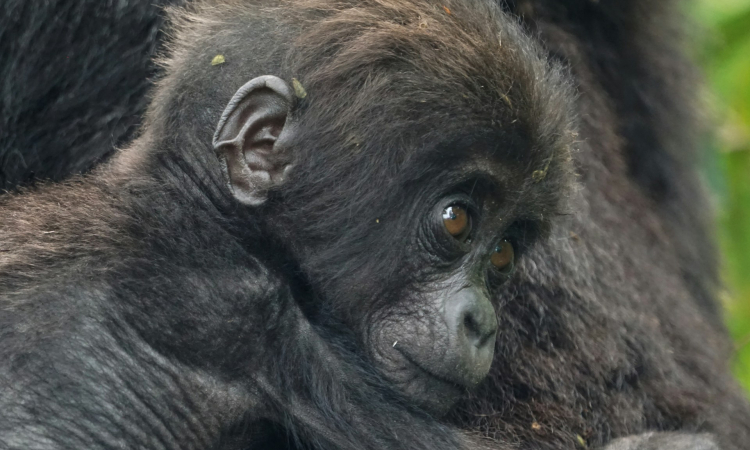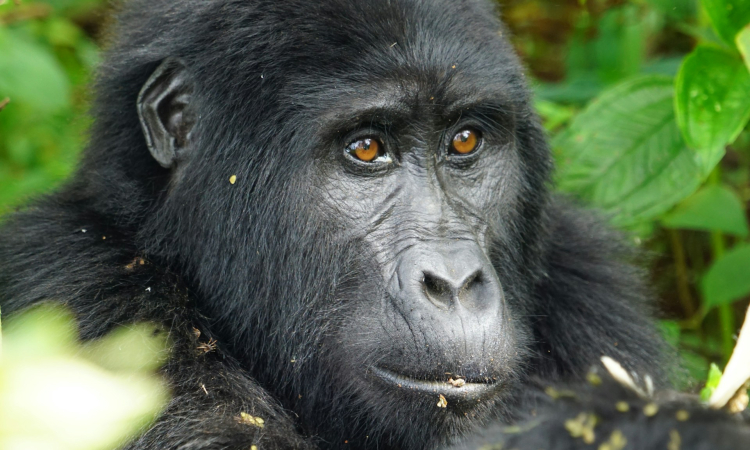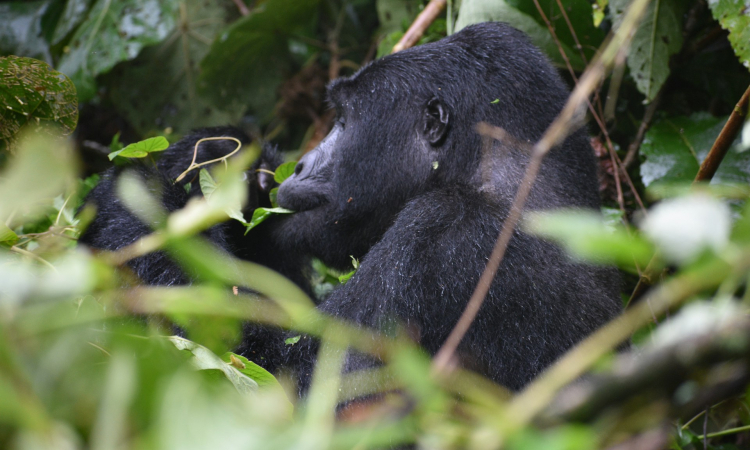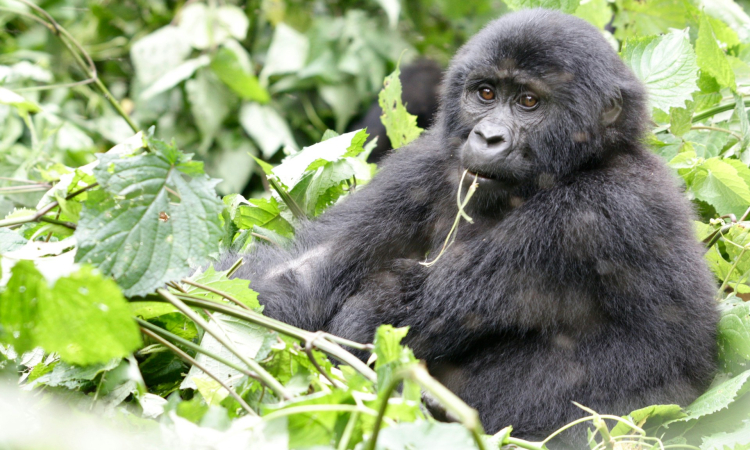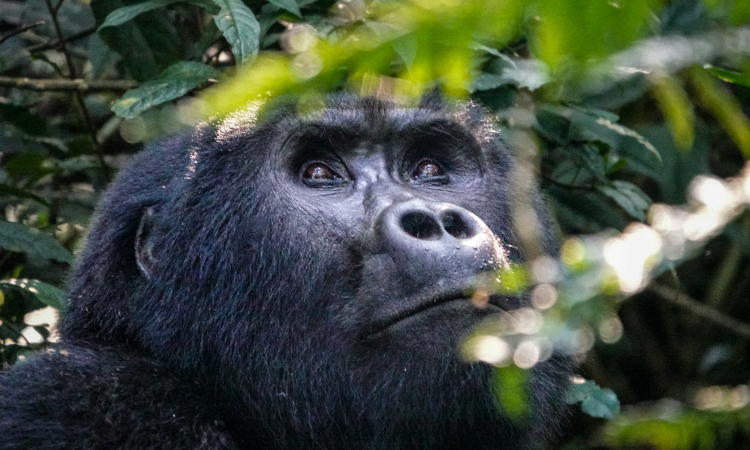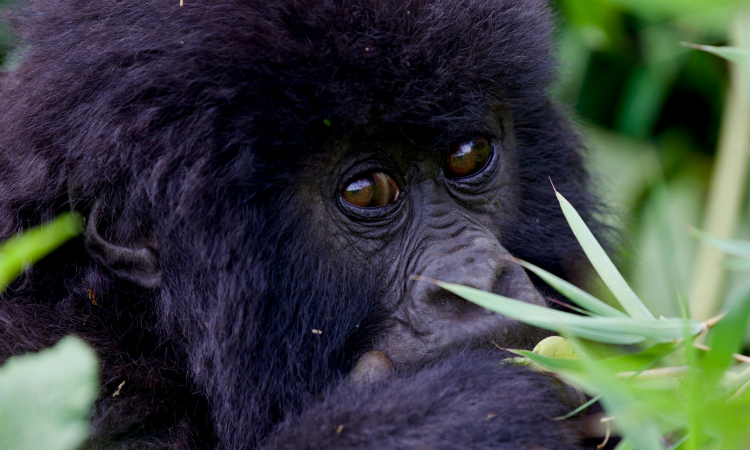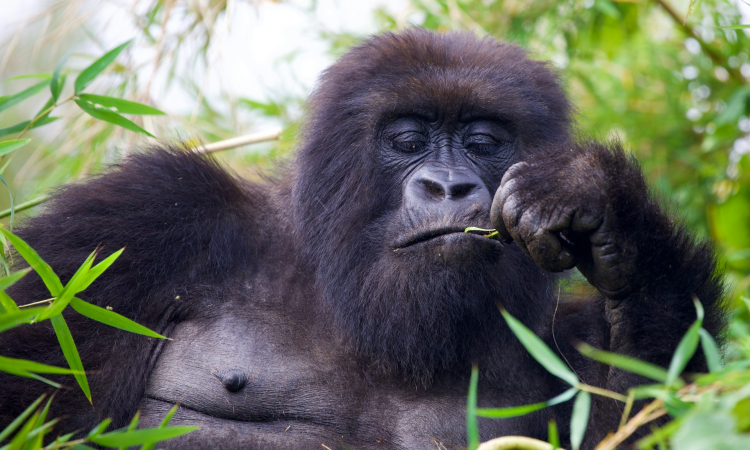
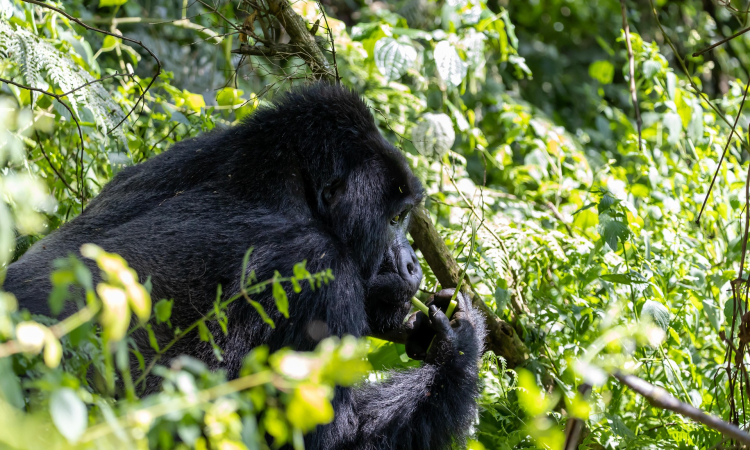
Mountain gorillas are a type of Eastern gorilla found in three African countries: Uganda, Rwanda, and the Democratic Republic of Congo.
These gorillas share about 98% of their DNA with humans, just like chimpanzees. They live in high mountain forests and form family groups of about 5 to 30 members. Each group is led by a dominant male known as a silverback, who makes all the decisions and protects the family.
According to a 2018 study, the total population of mountain gorillas in Africa is 1,063. This growth led to their conservation status changing from critically endangered to endangered.
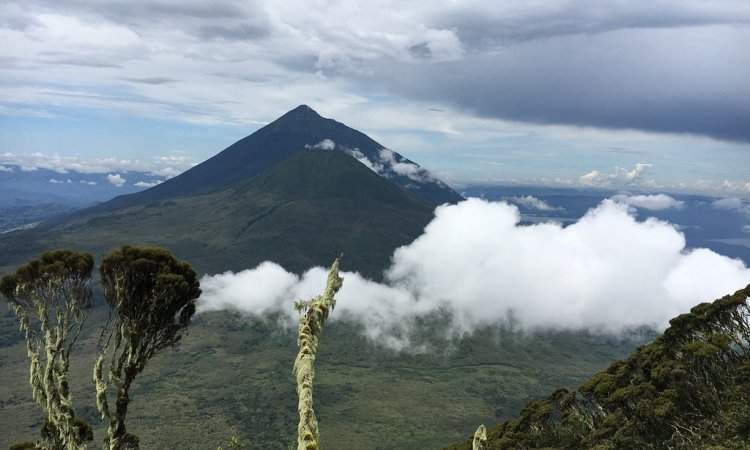
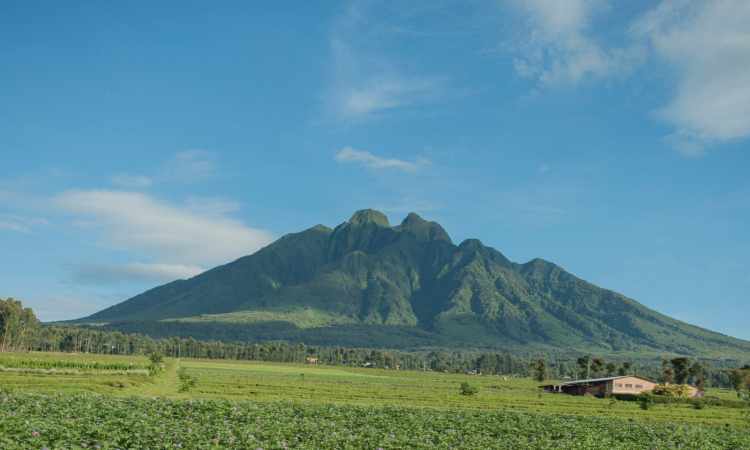
Uganda’s Bwindi Impenetrable National Park has the largest number of mountain gorillas, with about 459 individuals, nearly half of the total population. The remaining gorillas live in the Virunga Massif, which includes three parks: Mgahinga Gorilla National Park in Uganda, Virunga National Park in the Democratic Republic of Congo, and Volcanoes National Park in Rwanda. These three parks together have about 604 gorillas.
Researchers estimate gorilla populations using methods like collecting dung samples from their nests. Studies show that gorilla families that are habituated and monitored for research tend to grow faster than those that are not.
The main reason for the increase in the gorilla population is strong conservation work. This includes daily monitoring of the gorillas, selling gorilla trekking permits to raise funds for ranger salaries and park management, and cooperation among Uganda, Rwanda, and the Democratic Republic of Congo. These countries have set strict laws and invested heavily in protecting the species.
Even with the growing numbers, mountain gorillas still face threats such as habitat loss, disease, and civil unrest, especially in the Democratic Republic of Congo.
Mountain gorillas can be visited throughout the year in all three countries, but the best time to see them is during the dry seasons from June to August and December to February.
In conclusion, the population of mountain gorillas is improving compared to past years, and with continued protection, their numbers are expected to rise further.